The following are the keynote speakers of ICTIE 2026.For the latest updates, please visit the official website.

Prof. Qinxi Dong
Shandong Jiaotong University, China
Biography:
Qinxi Dong, male, born in 1962, a native of Lanling, Shandong Province, is a professor at Shandong Jiaotong University. He graduated with a bachelor's degree in Solid Mechanics from the School of Astronautics, Beijing Institute of Technology in 1986, and earned a master's degree in Computational Mechanics from the same school in 1989. From May 1989 to February 1995, he engaged in teaching and research at Beijing Institute of Technology. In 1997, he obtained his Doctor of Science degree in Computational Mechanics from the University of Innsbruck, Austria. He has long been dedicated to research on supercomputing algorithms and large-scale structural data storage in high-performance computing environments. He developed a proprietary supercomputing support software platform, successfully applying his research achievements to analysis and simulation in earthquake engineering, engineering geology, fluid mechanics, advanced manufacturing, and the formation and function of novel composite materials. His work resulted in a complete suite of engineering application systems including supercomputing algorithm optimization, supercomputing software support, and big data analysis. The supercomputing software he developed has become one of the indispensable support tools in the fields of disaster prevention and mitigation engineering and composite material simulation in Japan. It has made significant impact, generating considerable economic value and profits, and has received positive international recognition. Since 2017, he has been a specially appointed expert of the Ministry of Education’s Chunhui Program for Overseas Doctoral Experts. In 2019, he was elected as a Foreign Member of the Japan Engineering Academy.

Prof. Peiwen Hao
Chang'an University, China
Biography:
Professor Hao Peiwen is a second-level professor at Chang'an University and a doctoral supervisor. He was a postdoctoral fellow of the Japan Society for the Promotion of Science (JSPS) and enjoys the special government allowance. He is the director of the Asphalt Concrete Sub-committee of the National Standardization Committee, a member of the Recycling Committee of the International Society of Asphalt Pavement, a director of the Road Engineering Society of the China Highway Society, a director of the Maintenance and Management Branch of the China Highway Society, and the chief expert of the Guangdong Asphalt Concrete Supply Chain Association. He is also an editorial board member of journals such as "Petroleum Chemical Technology and Application", "Journal of Chang'an University", "Journal of Highway and Transportation Research and Development", and "Journal of Changsha University of Science and Technology". In recent years, Professor Hao Peiwen has participated in the formulation of numerous standards, including the "Technical Specifications for Construction of Asphalt Pavement at Civil Airports" and "Technical Specifications for Maintenance of Asphalt Concrete Pavement at Civil Airports" by the Civil Aviation Administration of China, the "Technical Specifications for Asphalt Pavement Recycling" by the Ministry of Transport, the "Technical Regulations for Color Asphalt Concrete Pavement on Urban Roads" and "Technical Regulations for Rubber Asphalt Concrete Pavement" by the Ministry of Housing and Urban-Rural Development, the national standards "Recycled Asphalt Concrete", "Color Asphalt Concrete", "Asphalt Concrete with Anti-Rutting Agent for Road Use", and "Detection Method for Content of Styrene-Butadiene-Styrene Block Copolymer (SBS) Modifier in Road Use Asphalt", as well as the "Green Highway Evaluation Standard" and the local standard "Technical Specifications for Construction of Asphalt Paving Layer in Coal Mine Roadways". Professor Hao Peiwen has won over 20 provincial and ministerial-level science and technology progress awards in recent years. He has published more than 100 research papers in domestic and international public periodicals. He has authored books such as "Construction and Maintenance Technology of Asphalt Pavement", "Asphalt and Asphalt Mixture", "Practical Quality Control and Acceptance of Asphalt Pavement Construction", "Design and Construction Technology of Semi-Flexible Pavement Materials", and "Construction and Disease Prevention Technology of SMA Pavement", and co-authored important contemporary scientific works such as "Road Performance of Asphalt and Asphalt Mixture", as well as books like "Asphalt Pavement", "Test and Detection of Roadbed and Pavement", and "Asphalt Pavement Engineering Manual".

Prof. Wen Xiong
Southeast University, China
Biography:
Wen Xiong (born in 1982) is a Young Chief Professor at the School of Transportation, Southeast University, a doctoral supervisor, and a National First-Class Registered Structural Engineer. He is a well-known young scholar in the field of bridge engineering. Professor Xiong received his PhD from Tongji University in 2009 and conducted postdoctoral research at Louisiana State University in the United States. He is currently the Director of the Department of Bridge Engineering and the Deputy Director of the Secretariat of the Academic Committee at Southeast University, as well as the Vice Dean of the National Key Laboratory of Safe, Long-Life and Health Operation of Large Bridges and the Director of the Jiangsu Provincial Key Laboratory of Intelligent Construction and Operation & Maintenance of Digital Bridges. As a recipient of the National Science Fund for Distinguished Young Scholars and the Mao Yisheng Science and Technology Award—Bridge Youth Award, he has long been engaged in research on underwater bridge safety, digital twins, and intelligent construction, maintenance, and management. He has led more than 60 projects, including those under the National Key R&D Program and the National Natural Science Foundation of China, published over 150 SCI/EI papers, authored seven monographs, and been granted more than 50 Chinese and U.S. patents. He has also received the First Prize for Outstanding Scientific Research Achievements from the Ministry of Education, the Gold Medal at the Geneva International Exhibition of Inventions, and the 2025 Jiangsu Youth Science and Technology Award. In addition, Professor Xiong serves as Chair of the Bridge Hydrodynamics Committee of the World Conference on Transport Research, a member of the State Council Accident Investigation Expert Group, and a young editorial board member of several leading journals.
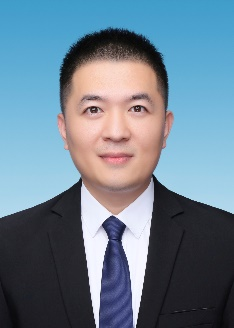
Prof. Zhipeng Li
Shandong Jiaotong University, China
Biography:
Zhipeng Li, Ph.D., Professor, and Acting Associate Dean of the School of Transportation and Civil Engineering, is a Taishan Scholar Young Expert and leader of a youth innovation team in Shandong Province. He serves on several professional committees, including the Technical Committee of the World Transportation Congress and the Tunnel and Underground Engineering Branch of the China Civil Engineering Society. He is a young editorial board member for journals such as the Journal of Chang’an University (Natural Science Edition). He has led multiple national and provincial research projects, including those funded by the National Key R&D Program and the National Natural Science Foundation of China. As first or corresponding author, he has published over 30 high-level papers, authored one monograph, and holds more than 20 invention patents. In 2024, he ranked among the top 5% of highly cited scholars in China according to CNKI. His research focuses on disaster prevention in tunnels and underground engineering under complex geological conditions. He developed long-term design methods for tunnel disaster control, new grouting reinforcement materials for hydraulic environments, and efficient disaster mitigation equipment. These innovations have been successfully applied in over 30 major projects, including metro systems in Qingdao, Jinan, and Nanjing, and highways in Shandong and Jiangxi provinces. His work has earned two Shandong Provincial Science and Technology Progress Second-Class Awards, one First-Class Award from the China Highway Society, and a Second-Class Science and Technology Progress Award from Qingdao City.

Prof. Feng Zhang
Shandong University, China
Biography:
Zhang Feng, a native of Taizhou, Jiangsu, is a professor and doctoral supervisor at Shandong University. His research primarily focuses on disease prevention and reinforcement of prestressed concrete bridges, as well as seismic studies of bridge structures. He has led 23 national and provincial-level projects and 34 major entrusted engineering projects. He has been honored with the Science and Technology Progress Awards from Shandong Province, Shanxi Province, Shanxi Province, and Guangxi Province. His research on compressive casting concrete earned the Gold Medal for Invention at the 49th Geneva International Exhibition of Inventions. He has published over 100 academic papers, including more than 20 indexed in SCI and over 60 indexed in EI, and holds more than 20 invention patents. He serves as a peer reviewer for journals such as Construction and Building Materials, Engineering Structures, Structures, Journal of Bridge Engineering, and the Journal of Traffic and Transportation Engineering.

Prof. Yinfu Jin
Shenzhen University, China
Biography:
Yin-Fu JIN, Ph.D. in École Centrale de Nantes, France; Recipient of the National High-level Young Talents Program; Distinguished Professor at the College of Civil and Transportation Engineering, Shenzhen University. His research interests primarily focus on geotechnical engineering challenges in offshore clean energy development, including the optimization of constitutive parameters and intelligent selection of constitutive models for seabed soils, the application of machine learning in offshore geotechnical engineering, large-deformation numerical simulation of marine geological hazards and their engineering applications, the development of advanced numerical methods and platforms, and digital twin applications. He has published over 100 academic papers, including 16 articles in top-tier computational mechanics journals such as CMAME and IJMS, with an H-index of 37 (Scopus). Over the past five years, he has presided over or participated in 6 national and provincial-level research projects. He currently serves as a Young Editorial Board Member for several journals, including International Journal for Numerical and Analytical Methods in Geomechanics and Journal of Zhejiang University-SCIENCE A (SCI), and is a Think Tank Member for the journal Underground Space.

Prof. Eryu Zhu
Beijing Jiaotong University, China
Biography:
Eryu, Zhu,a doctoral supervisor, level-2 professor, the vice-President of the International Monorail Association (IMA). Currently, he is the director of the Straddle Monorail Transportation Research Center at Beijing Jiaotong University. He has trained over 150 doctoral and master's degree students. He has published more than 200 academic papers. He has obtained 142 patent authorizations. Since 2000, he has been involved in the scientific research of Straddle Monorail transportation in Chongqing, China. This has lasted for 25 years. The research results have been widely applied in the monorail transportation systems in Chongqing, Wuhu, and Daegu, South Korea, generating significant social, economic, and environmental benefits.